Dubai’s Global Role and Why Timing Matters Now
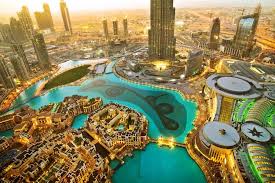
Dubai has evolved far beyond its origins as a regional trading post to become one of the most strategically positioned global cities of the 21st century, sitting at the crossroads of international travel, real estate investment, financial capital, and geopolitical neutrality. In a world increasingly shaped by uncertainty, Dubai’s appeal lies in its ability to offer speed without chaos, growth without instability, and global access without excessive regulation. News emerging from the emirate consistently reflects a city designed for movement — of people, businesses, and money — with policy frameworks intentionally built to attract long-term residents rather than short-term speculation. The question of where to go is increasingly answered by Dubai’s infrastructure, safety, and connectivity, while the question of when to go is tied closely to global travel cycles, investment windows, and residency incentives. As international interest rates fluctuate and traditional markets mature, Dubai has positioned itself not merely as an alternative, but as a central node in global decision-making. This transformation is not accidental; it is the result of decades of planning, legal reform, and capital deployment aimed at making Dubai indispensable to global travelers and investors alike.
Where and When to Go: Travel Cycles, Lifestyle Migration, and Tourism News
From a travel perspective, Dubai operates on a clearly defined seasonal rhythm that directly influences tourism flows, business travel, and short-term rental performance. The optimal period to visit Dubai remains between November and March, when moderate temperatures align with major international exhibitions, global conferences, cultural festivals, and peak leisure travel. During this window, hotel occupancy rates rise sharply, luxury retail spending increases, and airline traffic reaches its annual peak. However, recent tourism news highlights a growing shift toward year-round visitation, supported by indoor attractions, large-scale events, and expanded entertainment infrastructure. Areas such as Downtown Dubai, Dubai Marina, Palm Jumeirah, and Jumeirah Beach Residence remain central to tourism demand, while emerging districts like Dubai Creek Harbour and Bluewaters Island are increasingly featured in travel and lifestyle reporting. Beyond tourism, Dubai has also become a destination for lifestyle migration, attracting professionals, entrepreneurs, and remote workers seeking safety, connectivity, and tax efficiency. The timing of relocation often coincides with visa policy updates, school enrollment cycles, and business registration windows, making Dubai a city where travel decisions are frequently the first step toward permanent or semi-permanent residence.
Dubai Real Estate: Market Structure, Investment Flows, and Strategic Entry Points
Dubai’s real estate market occupies a unique position in global property news, combining foreign ownership rights, high liquidity, and relatively transparent transaction processes. Unlike many global cities constrained by supply shortages or regulatory barriers, Dubai continues to expand horizontally and vertically, offering investors a wide spectrum of options ranging from ultra-luxury villas to mid-market apartments and master-planned communities. Recent real estate news indicates sustained demand across both end-user and investor segments, supported by population growth, tourism recovery, and corporate relocation. Rental yields in well-located areas frequently outperform those in traditional European capitals, particularly in short-term and holiday rental markets. Off-plan developments remain a significant feature of Dubai’s market, with flexible payment plans and developer incentives attracting international buyers. However, timing is critical: early entry into growth corridors such as Dubai South, Mohammed Bin Rashid City, and Dubai Creek Harbour contrasts with stabilized premium zones where capital appreciation is slower but income is more predictable. Importantly, Dubai’s property cycle is increasingly shaped by fundamentals rather than speculation, with demand driven by actual occupancy, employment growth, and long-term residency rather than purely flipping behavior.
Financial Landscape: Tax Structure, Capital Mobility, and Investor Confidence
Dubai’s financial appeal is inseparable from its tax framework, which remains one of the most competitive globally. The absence of personal income tax, combined with business-friendly corporate regulations and extensive double taxation treaties, continues to attract high-net-worth individuals and international entrepreneurs. The Dubai International Financial Centre plays a critical role in this ecosystem, offering a common-law legal framework that appeals to global banks, investment funds, fintech firms, and asset managers. News surrounding financial regulation in Dubai increasingly highlights a balance between innovation and oversight, particularly in areas such as digital assets, wealth management, and cross-border finance. Capital mobility remains one of Dubai’s defining strengths, allowing investors to move funds efficiently across regions while operating within a politically stable environment. For global investors facing increasing tax pressure and regulatory complexity elsewhere, Dubai represents not merely a tax haven, but a fully developed financial jurisdiction capable of supporting complex international operations. The timing of financial entry into Dubai often aligns with broader global cycles, as investors seek diversification away from saturated markets and exposure to faster-growing regions.
Policy, Visas, and News Shaping Long-Term Confidence
Recent policy developments continue to reinforce Dubai’s long-term attractiveness. News related to long-term residency options, including Golden Visas and expanded eligibility criteria, has reshaped how expatriates and investors view their future in the emirate. These programs are not symbolic; they directly influence real estate demand, school enrollment, and business formation. In parallel, regulatory reforms aimed at simplifying company ownership, reducing bureaucracy, and digitizing government services have strengthened Dubai’s reputation for efficiency. International news coverage increasingly frames Dubai as a neutral platform for global business, particularly at a time when geopolitical tensions and regulatory fragmentation are reshaping traditional financial centers. Infrastructure investment remains relentless, with continued expansion in transportation, logistics, and urban development. These policy and infrastructure signals serve as confidence markers, indicating that Dubai’s growth is not opportunistic, but institutionalized through governance and long-term planning.
Dubai as a Long-Term Global Indicator
Looking forward, Dubai’s trajectory suggests a city transitioning from rapid expansion to sustained global relevance. Travel trends point toward continued diversification of visitor profiles, real estate news highlights increasing market maturity, and financial indicators reflect steady capital inflows rather than speculative spikes. The question of where to go and when to go increasingly intersects with broader life planning, as Dubai positions itself as a place not just to visit or invest, but to base global operations and build long-term stability. Risks remain — including global economic slowdowns and shifting interest rate environments — but Dubai’s adaptive policy framework and diversified economy provide buffers uncommon in many global cities. In an era where mobility, capital, and opportunity are constantly being renegotiated, Dubai stands as a case study in how deliberate strategy can turn geography into destiny. For travelers, investors, and global citizens alike, Dubai is no longer a temporary stop — it is a signal of where the world is moving next.
But nothing the copy said could convince her and so it didn’t take long until a few insidious Copy Writers ambushed her, made her drunk with Longe and Parole and dragged her into their agency, where they abused her for their projects again and again.
Proven Success Stories
Separated they live in Bookmarksgrove right at the coast of the Semantics, a large language ocean. A small river named Duden flows by their place and supplies it with the necessary regelialia. It is a paradisematic country, in which roasted parts of sentences fly into your mouth.
- Australia reopens borders to vaccinated tourists.
- Japan launches new high-speed rail line connecting Tokyo and Osaka.
- Greece introduces digital nomad visa for remote workers.
- Italy unveils plans for sustainable tourism initiatives.
- New luxury eco-resort opens in the Maldives.