Dubai’s Property Market as a Global Investment Signal
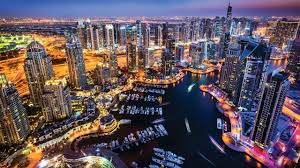
Dubai’s real estate market has become one of the most closely watched indicators of global capital movement, reflecting broader shifts in investor confidence, geopolitical positioning, and lifestyle-driven relocation. Unlike traditional property markets that rely heavily on domestic demand, Dubai’s real estate sector is fundamentally international, shaped by buyers from Europe, Asia, Africa, and the Middle East seeking both income and strategic positioning. Recent real estate news points to a market that has matured significantly from its earlier boom-and-bust cycles, with regulatory reforms, escrow protections, and transparency measures reducing speculative excess. Timing plays a central role in Dubai’s appeal: investors increasingly view entry into the market not as a short-term trade, but as a calculated allocation within a diversified global portfolio. The emirate’s ability to absorb large volumes of foreign capital without destabilizing price swings has strengthened its reputation as a resilient investment destination, particularly during periods of uncertainty in Western and emerging markets alike.
Market Segmentation: Luxury, Mid-Market, and Emerging Districts
Dubai’s property market is defined by its diversity, offering clear segmentation across luxury, mid-market, and emerging development zones. Luxury real estate, particularly on Palm Jumeirah, Emirates Hills, and waterfront districts, continues to attract ultra-high-net-worth individuals seeking security, privacy, and asset preservation. At the same time, mid-market apartments in areas such as Jumeirah Village Circle, Business Bay, and Dubai Hills Estate have become the backbone of rental demand, driven by professionals and long-term residents. Emerging districts, including Dubai South, Dubai Creek Harbour, and Mohammed Bin Rashid City, represent the next phase of growth, appealing to investors willing to trade immediate income for long-term capital appreciation. Real estate news increasingly highlights how infrastructure expansion and master planning play a decisive role in determining future value. Unlike constrained cities where supply is limited, Dubai’s expansion model allows investors to choose timing strategically — entering early in growth corridors or consolidating positions in established zones.
Rental Yields, Short-Term Lets, and Income Performance
One of Dubai’s strongest investment narratives lies in its income-generating potential. Rental yields in Dubai frequently outperform those in major European capitals, particularly when factoring in the absence of property taxes and lower transaction friction. Short-term rentals, supported by year-round tourism and business travel, have become a significant driver of investor interest, especially in centrally located and waterfront areas. News from the hospitality and property sectors shows increasing professionalization of short-term letting, with regulatory clarity helping stabilize returns. Long-term rentals, meanwhile, benefit from population growth, corporate relocation, and expanding visa options that encourage residency rather than transient stays. However, timing remains crucial: investors entering during high-demand cycles can secure premium rents, while those entering during supply expansions must focus on quality, location, and management efficiency. The ability to pivot between long-term and short-term rental strategies gives Dubai investors flexibility rarely found in more rigid markets.
Financing, Off-Plan Investments, and Risk Management
Dubai’s real estate financing environment has evolved alongside its market maturity. While cash buyers remain prominent, mortgage availability for residents and non-residents has improved, supported by local and international banks. Off-plan investments continue to play a central role, offering phased payment plans that reduce upfront capital requirements and attract global buyers. Recent news emphasizes increased due diligence among investors, with greater attention paid to developer reputation, delivery timelines, and project fundamentals. Regulatory oversight, including escrow account requirements, has significantly reduced construction risk compared to earlier market cycles. That said, off-plan investments remain timing-sensitive: early entry can generate substantial appreciation, while late entry may compress returns. Savvy investors increasingly approach Dubai’s property market with institutional discipline, focusing on exit strategies, cash flow modeling, and macroeconomic indicators rather than speculative hype.
Policy, Foreign Ownership, and Market Confidence
Policy stability has been one of the most decisive factors in sustaining confidence in Dubai’s real estate sector. The expansion of freehold ownership zones for foreigners, combined with residency-linked property incentives, has deepened long-term commitment from international buyers. News surrounding Golden Visas and investor residency programs has had a measurable impact on high-value property transactions, particularly in luxury segments. Regulatory clarity around inheritance, company ownership, and dispute resolution further supports market credibility. Importantly, Dubai’s government has demonstrated a willingness to intervene pragmatically — adjusting supply, regulating short-term rentals, and monitoring lending practices — to prevent overheating. This adaptive governance model differentiates Dubai from speculative markets where regulatory responses often lag behind market excess.
Strategic Timing in a Maturing Market
Looking ahead, Dubai’s real estate market appears positioned for sustained, disciplined growth rather than explosive volatility. Infrastructure investment, population expansion, and continued global branding support long-term demand, while regulatory oversight provides downside protection. For investors, the key question is no longer whether Dubai real estate is viable, but how and when to enter. Early-stage districts offer higher growth potential but require patience, while established areas provide predictable income with lower risk. As global investors reassess exposure to traditional property markets constrained by taxation and regulation, Dubai continues to offer a compelling alternative. In this context, Dubai’s real estate sector serves not just as a local market, but as a global barometer for how capital seeks mobility, efficiency, and security in an increasingly fragmented world.
But nothing the copy said could convince her and so it didn’t take long until a few insidious Copy Writers ambushed her, made her drunk with Longe and Parole and dragged her into their agency, where they abused her for their projects again and again.
Proven Success Stories
Separated they live in Bookmarksgrove right at the coast of the Semantics, a large language ocean. A small river named Duden flows by their place and supplies it with the necessary regelialia. It is a paradisematic country, in which roasted parts of sentences fly into your mouth.
- Australia reopens borders to vaccinated tourists.
- Japan launches new high-speed rail line connecting Tokyo and Osaka.
- Greece introduces digital nomad visa for remote workers.
- Italy unveils plans for sustainable tourism initiatives.
- New luxury eco-resort opens in the Maldives.